
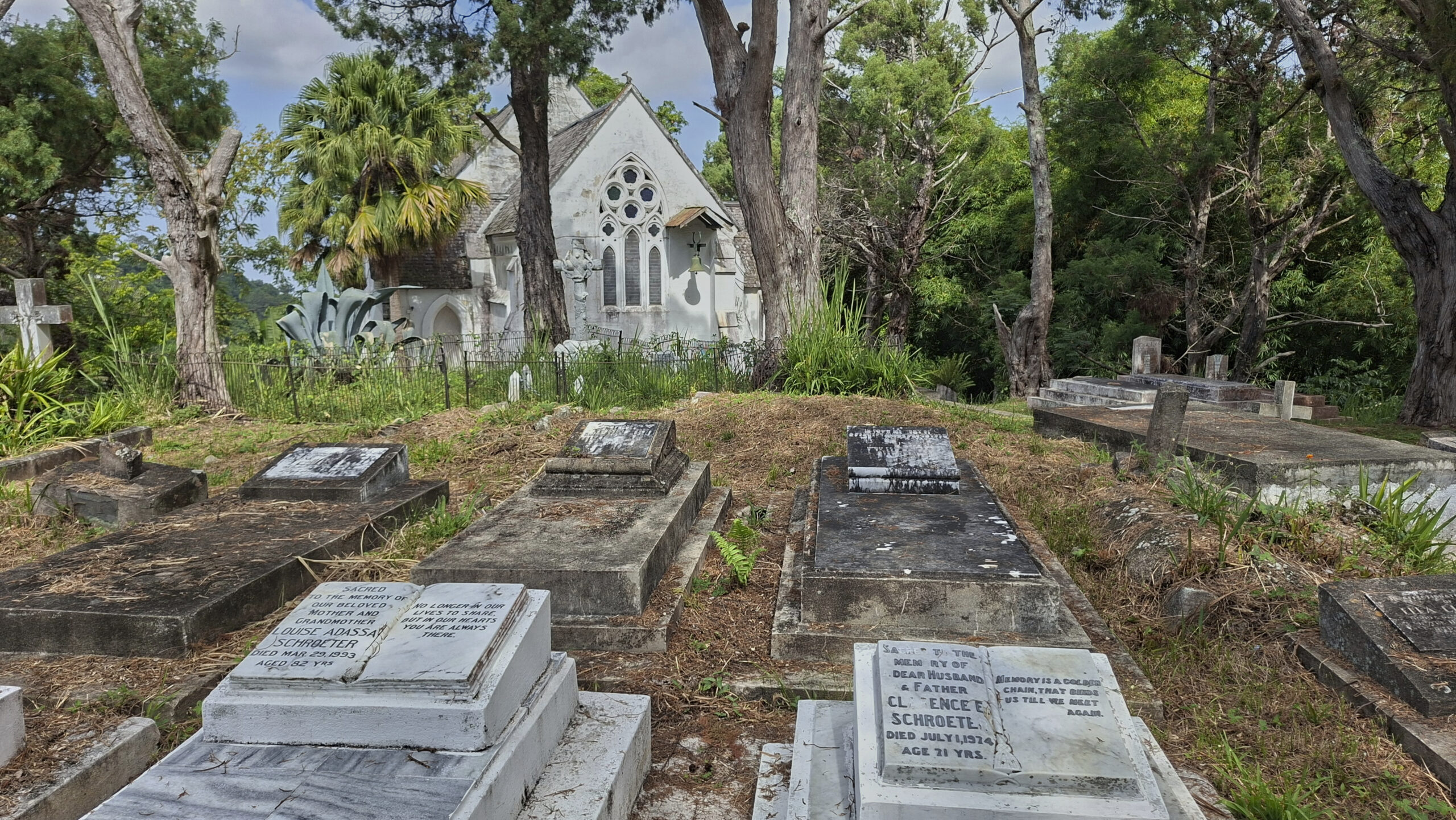
The graveyard at St. Mark’s Anglican Church at Redlight, Irish Town, Jamaica has been in use since the 19th century.
I’ve recently been drawn to one of my community’s oldest graveyard. No, I’m not searching for zombies but for information that will flesh-out the history of the community in which I now live.
St. Mark’s Anglican Church was built in the 19th century in the district of Craighton in the community of Irish Town on the foothills of the Blue Mountains of eastern Jamaica. Very few people refer to the community as Craighton, as it is known as Redlight. It received this moniker because it was allegedly the red light district for the soldiers based at the Newcastle military training base established in 1841 and located just up the B1 road. The B1 is one of Jamaica’s most scenic drives, starting just above Papine in St. Andrew, snaking its way through the Blue Mountains and ending at Buff Bay in Portland on Jamaica’s northeast coast.
Over 200 years ago, British colonisers and slave-owners established coffee farms in these hills to create what would become known as one of the world’s premier brews – Jamaica’s Blue Mountain Coffee. There are still a number of active coffee estates along the B1 road. These include: the Japanese owned Jamaica UCC Blue Mountain Coffee Co. at the nearby Craighton Great House; Clifton Mount, located above Newcastle; and on the Portland side of the B1 we have Old Tavern Coffee Estate and Wallenford. In fact, the Newcastle facility was created on what was a former coffee estate.
The graveyard at St. Mark’s provides a fascinating insight into the community’s history. Hence my reason for visiting.
Yellow Fever at St. Mark’s Entrance
Among the dense vegetation near the front entrance to the church, two sets of graves stood out. The first is of Randolph Drew of the Royal Navy who died in 1873 of yellow fever at the age of 31. It is of interest because many thousands of British soldiers died of yellow fever in Jamaica and the wider West Indies. In fact, the military camp was established at Newcastle as the mountain environment was believed to be healthier for the soldiers than Kingston and Port Royal’s swampy coastline which was a breeding ground for mosquitoes.
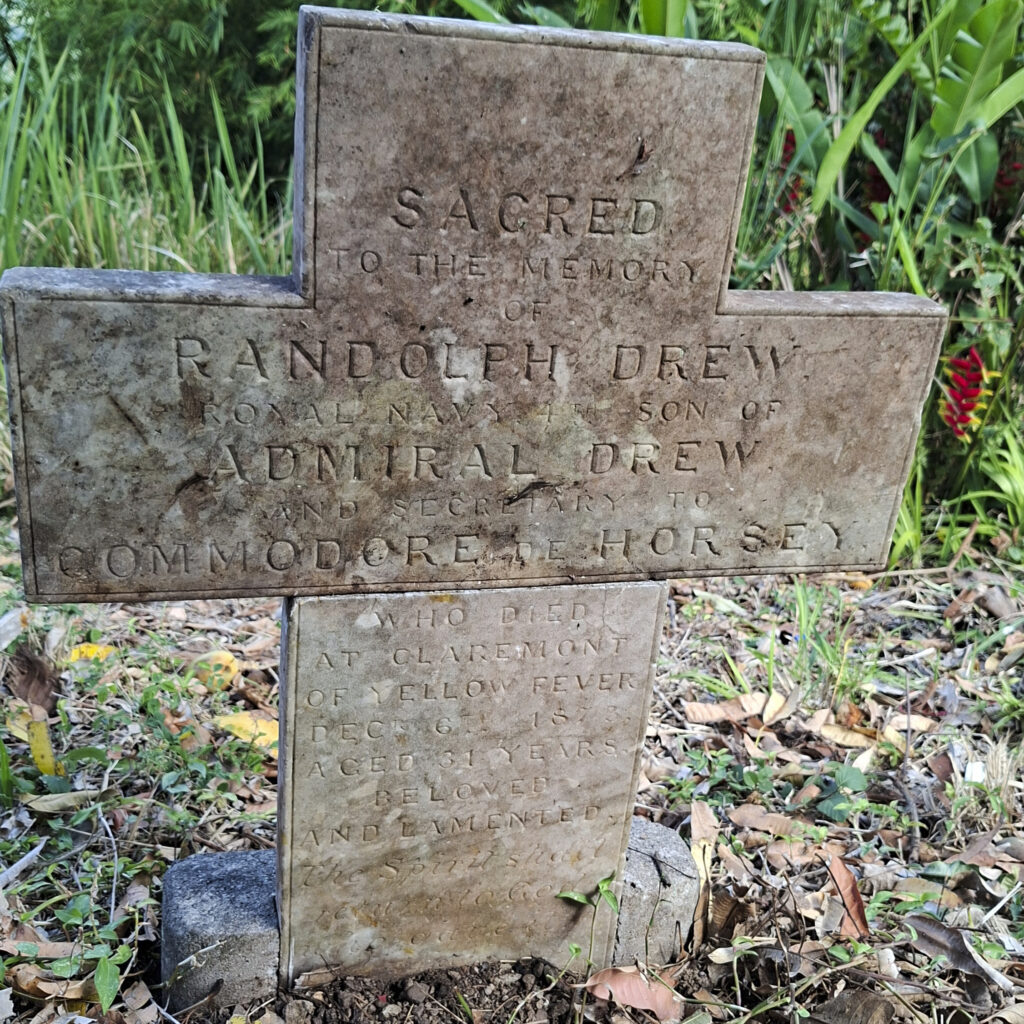
The headstone of Randolph Drew of the Royal Navy who died of yellow fever in 1873.
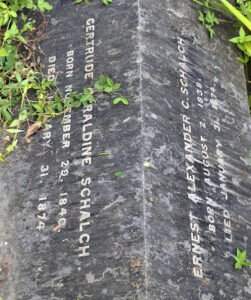
The double grave of Ernest and Gertrude Schalch, who both died in 1874.
Close to Drew’s headstone is the grave of Jamaica’s former Attorney General Ernest Schalch and his sister Gertrude, who both died on January 31 1874, also of yellow fever. They lived in Bermuda Mount, which is just below Craighton. The location of both graves at the entrance of the church is noteworthy as the Anglican church in Jamaica ceased to bury parishioners within the church building due to the outbreak of yellow fever.
The Irish Connection
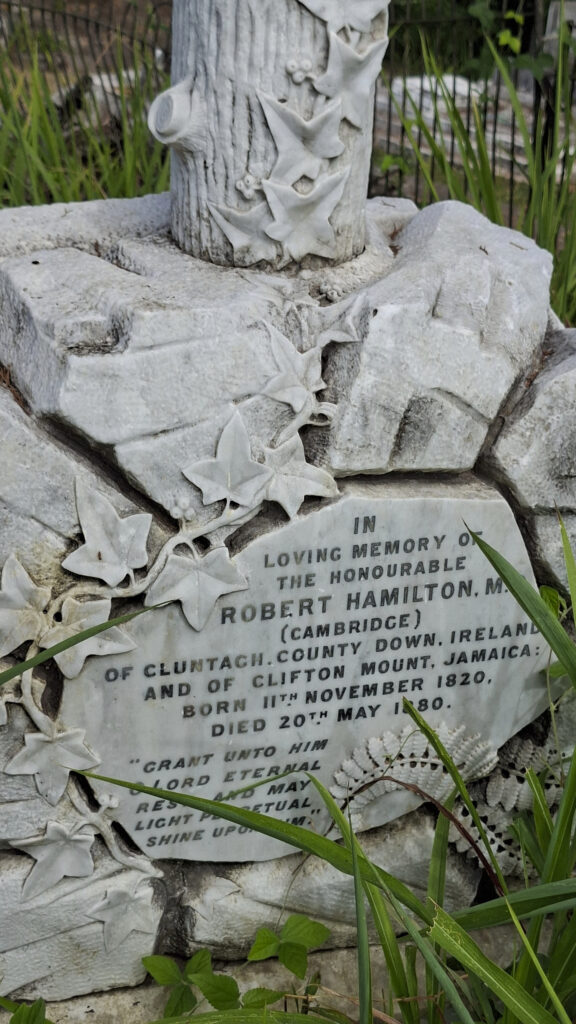
Details of the gravestone of Robert Hamilton of Clifton Mount.
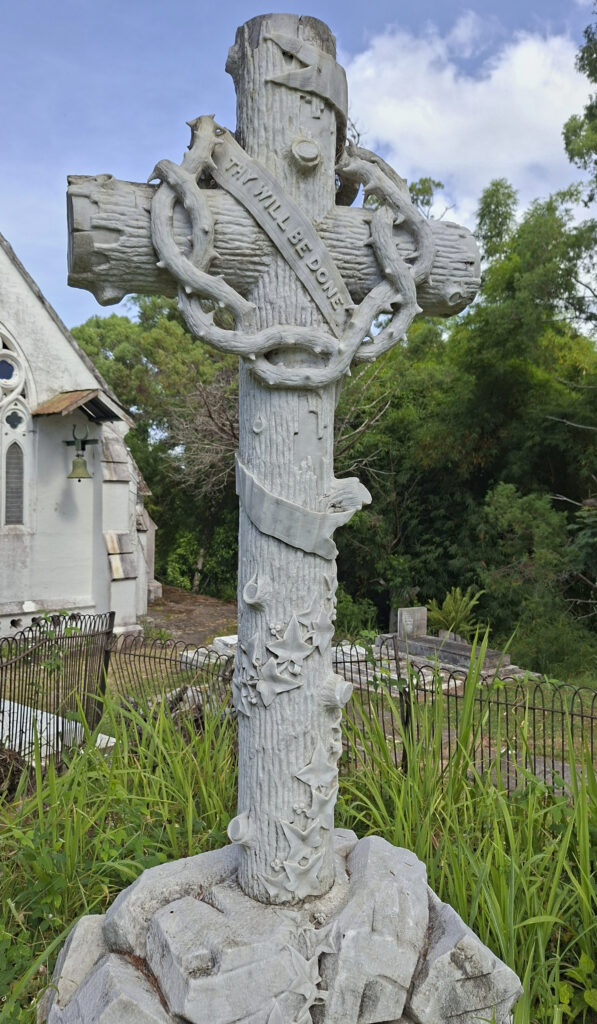
The iconography on Robert Hamilton’s gravestone.
Redlight/Craighton is located just up the B1 from Irish Town, which is so named as it was originally a site of Irish settlers in Jamaica. According to Collins (2019), from the 17th century “Vast numbers of Irish men, women and children were forcibly transported by the English government to the Caribbean, many as indentured servants.” Robert Hamilton, who is buried under one of the most ornate gravestones of the cemetery, was born in County Down, Ireland in 1820 and was associated with the Clifton Mount coffee estate. He was obviously of great importance as the grave is surrounded by a metal fence and possesses the most elaborate iconography, which includes Masonic symbols.
Contemporary Craighton
In addition to the history that is found at St. Mark’s, it should be noted that it is still an active church and graveyard. One of the recent graves is that of a resident known as “Maroon”, so called because of his possible connection to one of the several Windward Maroon communities found in the Blue Mountains. The Maroons were enslaved Africans that escaped from coastal slave plantation into the mountainous interior. Here they established their own communities, from which they conducted guerilla warfare against both Spanish and British colonists.
The graveyard at St. Mark’s possesses opportunities for heritage education through field trips held in collaboration with the Jamaica National Heritage Trust, the Anglican Diocese of Jamaica and the Redlight community. This could result in the cleaning and maintenance of both historical and contemporary graves. The Drew, Hamilton and Schalch graves are all overgrown, with the top of Drew headstone separated from the base. (I had to piece it together for the photo). The visits could contribute financially to both the Church and the community, while using St. Mark’s as a case study of how Jamaica’s colonial and contemporary history can be discovered in neighbourhood graveyards.
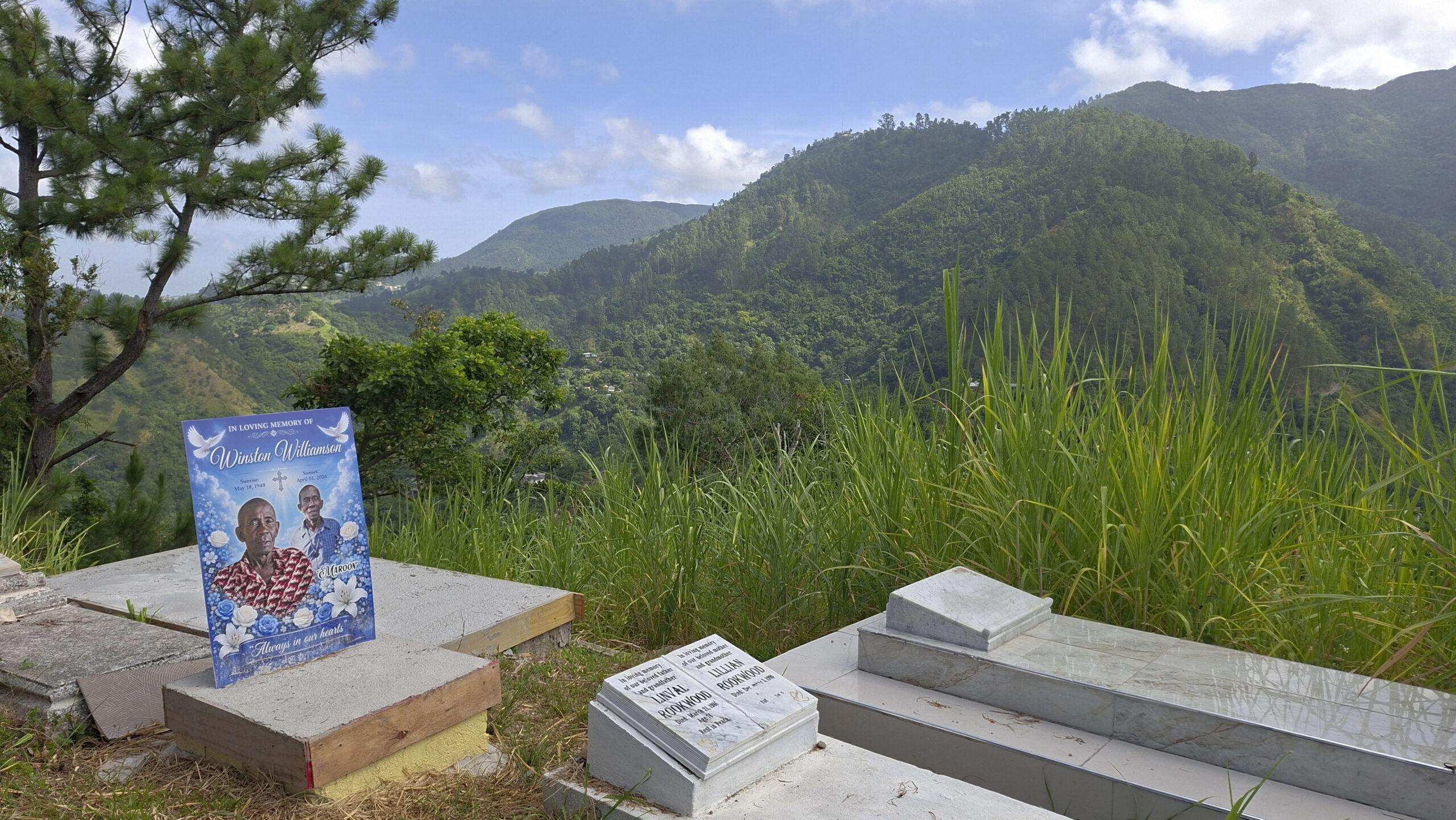
The grave of “Maroon”, a recently deceased resident of Redlight.
Further Readings
Lawson, G. (2011). The role of cemeteries in historical research: The curious case of Pioneer Park. The Journal of San Diego History, 57(1), 53–68. https://sandiegohistory.org/journal/v57-1/v57-1lawson.pdf
Paraskevopoulou, I. (2019). The cultural heritage of cemeteries. In G. Evangelia (Ed.), Ancient Greek Art and European Funerary Art (pp. 257-276). Newcastle upon Tyne: Cambridge Scholars Publishing.
President and Fellows of Harvard College. (n.d.). How to Read a Graveyard. Do History https://dohistory.org/on_your_own/toolkit/graveyards.html